Source Steel Cash Register Drawer for Retail Stores, Restaurants, and Markets
Explore 30 Steel Cash Register Drawer options featuring mechanical locks, RJ11 interfaces, and adjustable bill slots. Buyers can compare specifications, certifications, and pricing to find the right POS cash drawer for commercial applications.
Key considerations
Products List


Office Steel Cabinet File Storage Cabinet Metal 2 Drawer Filing Cabinet
$25.00 - $32.00
MOQ: 50 Pieces

Durable 3 Drawer Lateral File Cabinet for Office Storage Steel A4 Files Cabinet
$49.00 - $69.00
MOQ: 50 Pieces




Storage Filing Cabinets 2 Drawer File Cabinet Double Door Steel Cabinet
$49.00 - $59.00
MOQ: 10 Pieces
Comprehensive Sourcing Guide
Strategic Sourcing Guide for Steel Cash Register Drawers
Understanding Technical Specifications and Core Attributes
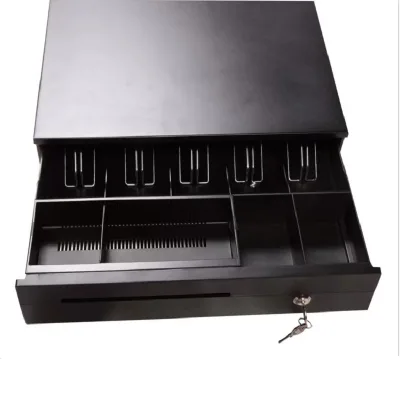
When sourcing a Steel Cash Register Drawer, the primary objective is to identify hardware that aligns with specific operational workflows while ensuring robust physical construction. The core material for these units is consistently identified as steel plate, providing the necessary durability for high-traffic commercial environments. Buyers must distinguish between various model configurations, as the market offers distinct variants such as the GS-405A and GS-410B series, each with unique dimensional and functional profiles.
The physical dimensions are a critical factor in integration with existing Point of Sale (POS) systems. Observed specifications indicate a standard footprint around 405mm in width and 420mm in length, with a height of approximately 100mm. However, variations exist; for instance, specific models may measure 410mm in width while maintaining the same depth and height. These dimensions are not merely aesthetic but dictate the available counter space and the compatibility with specific POS terminals. The weight of these units is equally significant for installation stability, with observed values ranging from 6.5 kg to 8 kg depending on the specific model and internal component density.
Internal organization is defined by the bill and coin handling capabilities. The standard configuration typically includes five bill boxes, designed to accommodate different currency denominations. The bill widths are adjustable to fit various regional currencies, with observed specifications listing widths such as 69mm, 67mm, 84mm, 87mm, and 85mm, alongside a standard length of 158mm. Coin compartments are equally versatile, featuring adjustable widths ranging from 80mm to 84mm, and specific coin slots designed for different coin sizes, such as 89mm by 66mm or 66mm by 134mm. This adjustability is essential for retailers operating in markets with fluctuating currency standards.
The locking mechanism is another pivotal technical attribute. These units generally utilize a mechanical lock system, often featuring a three-position lock configuration. This design allows for secure storage while facilitating quick access for authorized personnel. The security level is typically rated at 'C', which is appropriate for general commercial applications where high-value cash handling requires a balance between accessibility and theft deterrence. The interface for connecting the drawer to the POS system is predominantly the RJ11 port, a standard connection for electronic cash drawers. It is important to note that these units operate on an electronic working principle for the trigger mechanism but do not support network management, meaning they function as standalone peripherals rather than networked devices.
Compliance and Certification Verification
In the B2B procurement of commercial hardware, verifying compliance with international and regional standards is non-negotiable. The supply chain for steel cash register drawers often originates from manufacturing hubs in Mainland China, specifically Guangzhou. When evaluating suppliers, buyers must rigorously check for the presence of recognized certifications that validate product safety and environmental compliance.
The observed certification landscape for these products includes a combination of CCC (China Compulsory Certification), RoHS (Restriction of Hazardous Substances), ISO standards, and CE (Conformité Européenne). The presence of the CCC mark is particularly relevant for products intended for the Chinese market or those manufactured within China, indicating adherence to local safety and quality mandates. Simultaneously, the RoHS certification confirms that the product does not contain specific hazardous materials, which is a prerequisite for export to the European Union and many other jurisdictions. The CE marking further suggests that the product meets EU safety, health, and environmental requirements.
However, buyers must exercise caution when interpreting certification claims. While some product listings explicitly state a combination of certifications such as CCC, RoHS, and ISO, others may list only CE or FCC (Federal Communications Commission) compliance. The FCC certification, if present, indicates compliance with electromagnetic interference standards, which is crucial for electronic peripherals to ensure they do not disrupt other nearby equipment. It is imperative for procurement teams to request valid certification documentation directly from the supplier rather than relying solely on marketing descriptions. The absence of a specific certification in a product listing does not necessarily imply non-compliance, but it does require the buyer to initiate a verification process to ensure the product meets the regulatory requirements of the destination market.
Cost Drivers and Pricing Dynamics
The pricing structure for steel cash register drawers is influenced by a complex interplay of material costs, manufacturing complexity, and order volume. The observed price range for these units spans from approximately $4.42 to $1,300 USD. This wide disparity suggests that the market includes both basic, entry-level models and highly specialized, heavy-duty, or feature-rich variants. The lower end of the spectrum likely represents standard mechanical units with basic locking mechanisms and minimal customization, while the higher end may encompass models with enhanced security features, custom branding, or specialized configurations for specific industries.
Material costs play a significant role in the base price. The use of steel plate as the primary construction material ensures longevity but adds to the weight and shipping costs. The weight of the units, ranging from 6.5 kg to 8 kg, directly impacts logistics expenses, which are often factored into the final unit price. Additionally, the customization options available, such as specific bill box configurations or color variations (Black or White), can influence the cost. Customization is a key value driver, allowing businesses to tailor the hardware to their specific operational needs, but it typically incurs a premium over standard off-the-shelf models.
Minimum Order Quantity (MOQ) is another critical cost driver. The observed MOQ range varies from 1 unit to 500 units. For small businesses or those testing a new product line, suppliers offering an MOQ of 1 provide significant flexibility, though the per-unit cost may be higher. Conversely, large retailers or distributors seeking to minimize unit costs can leverage bulk purchasing power by ordering closer to the 500-unit threshold. The supply capacity of the manufacturer, observed at 1,000 units per month, indicates that while bulk orders are feasible, extremely large orders may require staggered delivery schedules to avoid supply chain bottlenecks.
Typical Applications and Operational Context
Steel cash register drawers are designed primarily for commercial applications, serving as the backbone of cash handling operations in retail, hospitality, and service industries. The specific application context dictates the required features. For instance, a retail store with high transaction volumes requires a drawer with a robust mechanical lock and a high-security level to prevent internal theft and unauthorized access. The 'C' security level rating is generally sufficient for these environments, providing a reliable barrier against casual tampering.
The interface compatibility is crucial for seamless integration. The RJ11 interface is the standard for connecting these drawers to POS terminals, printers, and other peripherals. It is important to verify that the target POS system supports this interface, as some modern systems may utilize USB or other proprietary connections. The lack of network management capabilities means these drawers are best suited for local, point-of-sale environments rather than distributed, networked cash management systems.
The payment method compatibility is straightforward, as these units are designed for cash transactions. They do not support electronic payment processing directly but serve as the physical storage and dispensing mechanism for cash. The absence of a built-in printer or touch screen is a standard feature, as these units are peripherals intended to work in conjunction with external devices. The 12-month warranty period observed in the market provides a baseline for after-sales support, ensuring that buyers have recourse in case of mechanical failure or manufacturing defects.
Supplier Evaluation and Quality Control
Evaluating suppliers for steel cash register drawers requires a multi-faceted approach that goes beyond price comparison. The origin of the product, typically Mainland China, necessitates a thorough vetting process to ensure quality consistency. Buyers should prioritize suppliers who offer OEM (Original Equipment Manufacturer) services, as this indicates a willingness to customize products and a higher level of manufacturing capability. The availability of OEM services suggests that the supplier can adapt the product to specific branding or functional requirements, adding value to the procurement process.
Quality control should be a central component of the supplier selection criteria. Buyers must verify the consistency of the steel plate construction and the precision of the internal mechanisms. The adjustable bill and coin widths are critical features that must function smoothly across the entire range of motion. Any stiffness or misalignment in these adjustments can lead to operational delays and customer dissatisfaction. Additionally, the packaging standards, which often include cartons with fiber bags, plastic bags, and foams, are essential for protecting the units during transit. Damaged units due to poor packaging can result in significant financial losses and delays.
The delivery time is another key metric for supplier evaluation. An observed delivery time of 3-5 working days suggests a responsive supply chain, but buyers should confirm if this applies to stock items or requires production lead time. For custom orders, the lead time may extend significantly. The warranty terms, typically 1 year, should be clearly defined in the contract, outlining the scope of coverage and the process for claiming repairs or replacements.
Long-Term Procurement Considerations
Sourcing steel cash register drawers is not a one-time transaction but part of a long-term procurement strategy. Buyers should consider the total cost of ownership, which includes not only the initial purchase price but also maintenance, replacement costs, and potential downtime. The mechanical nature of the lock and the electronic trigger mechanism means that these units are subject to wear and tear over time. A robust warranty and a reliable supplier who can provide spare parts are essential for minimizing downtime.
The scalability of the supply chain is also a critical factor. As a business grows, the demand for cash drawers will increase. A supplier with a monthly supply capacity of 1,000 units can support moderate growth, but larger enterprises may need to secure contracts with multiple suppliers to ensure a steady supply. The ability to customize the product, such as changing the color to match the store's aesthetic or adjusting the bill box configuration, allows the hardware to evolve with the business's changing needs.
Finally, buyers should remain vigilant regarding changes in certification standards and regulatory requirements. As global trade regulations evolve, the certifications required for import and sale may change. Maintaining a relationship with a supplier who is proactive about compliance and can provide updated documentation is crucial for long-term success. By focusing on these strategic considerations, buyers can ensure a reliable and cost-effective supply of steel cash register drawers that support their commercial operations for years to come.
Comparative Analysis of Key Models
To assist in decision-making, the following table summarizes the key differences between the observed model variants. This comparison highlights the variations in dimensions, weight, and specifications that may influence the final selection.
| Feature | Model GS-405A | Model GS-410B |
|---|---|---|
| Dimensions (W x L x H) | 405 x 420 x 100 mm | 410 x 420 x 100 mm |
| Weight | 6.5 Kgs | 8 Kgs |
| Bill Boxes | 5 | 5 |
| Bill Widths | 69/67/67/67/69mm | 83/71/71/71/70mm |
| Coin Width | 80/84/84/81mm (Adjustable) | 2/89(W)*66(L)mm, 2/66(W)*134(L)mm |
| Interface | RJ11 | RJ11 |
| Lock Type | Mechanical (3 Position) | Mechanical |
| Security Level | C | C |
| Warranty | 12 Month | 1 Year |
| Origin | China (Guangzhou) | China (Mainland) |
This comparison underscores that while the core functionality remains consistent, the specific dimensions and weight can vary. Buyers should select the model that best fits their physical counter space and operational weight requirements. The identical interface and lock type suggest that the operational experience will be similar across models, making the choice largely dependent on the physical constraints and specific bill/coin handling needs of the business.
FAQs
What certifications do steel cash register drawers typically have?
These units commonly hold CCC, RoHS, ISO, and CE certifications. Some models also include FCC compliance for electromagnetic standards. Buyers should verify specific documentation for their target market requirements.
How is the locking mechanism configured on these drawers?
The drawers utilize a mechanical lock system with a three-position lock configuration. This design provides a security level rated as C, suitable for general commercial applications where secure cash handling is essential.
What are the standard dimensions for a Steel Cash Register Drawer?
Standard models measure approximately 405mm in width, 420mm in length, and 100mm in height. Specific variants like the GS-410B may have a width of 410mm while maintaining similar depth and height profiles.
Can these drawers accommodate different currency denominations?
Yes, the bill boxes are adjustable to fit various regional currencies with widths ranging from 67mm to 87mm. Coin compartments also feature adjustable widths to handle different coin sizes effectively.
What interface is used to connect the drawer to a POS system?
The units connect via an RJ11 interface port, which is standard for electronic cash drawers. They operate on an electronic working principle but do not support network management capabilities.
Is customization available for these steel cash register drawers?
Customization is available for buyers needing specific configurations or branding. Options may include color variations like black or white, and OEM services are offered by some manufacturers to tailor the product.
What is the typical delivery time for these products?
The observed delivery time is typically 3 to 5 working days for stock items. Lead times may vary for custom orders or large bulk purchases requiring production scheduling.